You know how quickly a minor plumbing leak or a heavy spring storm can turn into a massive headache. As a trusted mold removal service in Wichita we see it constantly across the metro area. A small water intrusion goes unnoticed, and suddenly you have a much larger contamination problem on your hands.
The real issue is the speed of the spread.
Data from the Centers for Disease Control and Prevention (CDC) confirms that mold can begin colonizing wet materials within 24 to 48 hours. Wichita’s 33 inches of annual rainfall and frequent freeze-thaw cycles provide the exact conditions these spores need to thrive. We will break down exactly what these indicators mean and walk through the specific steps you should take next.
1. A Persistent Musty Smell
That distinct, earthy odor that never quite goes away is often your very first warning sign. We routinely find that homeowners smell a problem long before they see it. This scent is caused by microbial volatile organic compounds (MVOCs), specifically gases like geosmin and 2-methylisoborneol.
Active mold colonies release these gases as they digest organic materials in your home.
The reason you can smell it without seeing it is purely chemical. MVOCs are incredibly light vapors capable of passing right through drywall and vapor barriers. The CDC notes that detecting these musty odors is often a more reliable indicator of a hidden problem than standard air sampling.
Common Odor Hotspots
Pay close attention to specific areas where this smell concentrates. You will usually notice the strongest odors in:
- Basements with poor ventilation
- Bathrooms lacking adequate exhaust fans
- Laundry rooms near dryer vents
- Spaces beneath stairwells
- Areas directly below roof valleys
What to do: Do not try to mask a persistent musty smell with candles or air fresheners. We recommend scheduling a professional inspection immediately. An expert can use specialized equipment to pinpoint the exact location of the off-gassing colony.
2. Dark Spots on Walls, Ceilings, or Around Windows
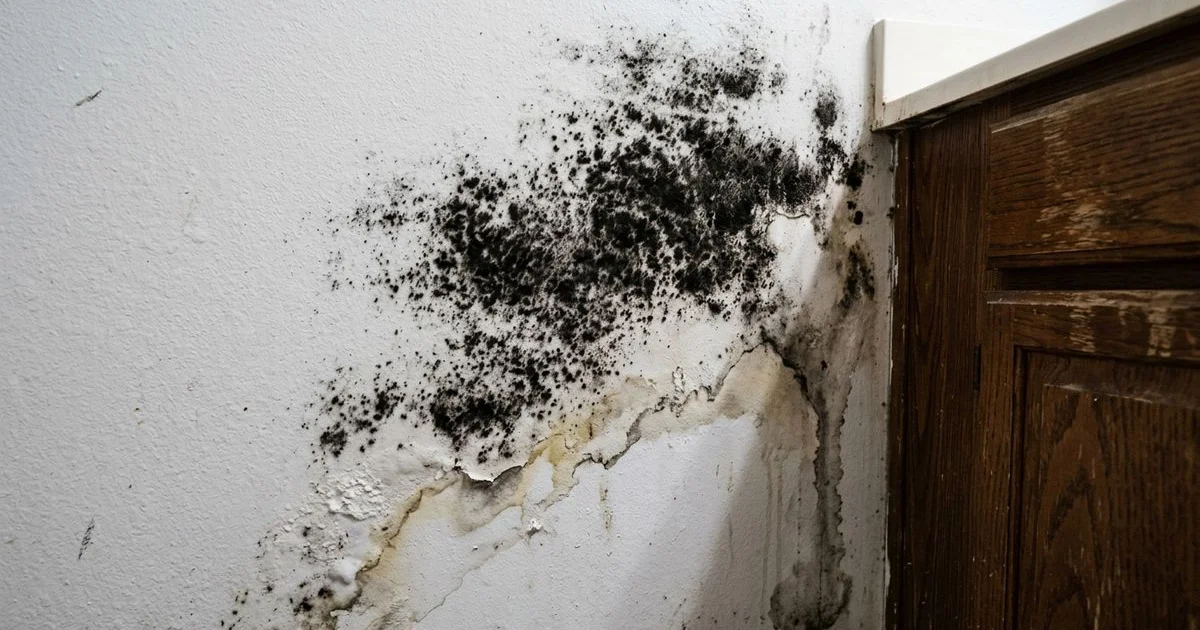
Visible fungal growth often appears as dark patches on porous surfaces. We regularly encounter homeowners who panic at the sight of any dark spot, assuming the worst. While toxic black mold (Stachybotrys chartarum) is a serious concern, not all dark spots are equally dangerous.
Different species manifest in distinct colors depending on their food source and maturity. Penicillium frequently appears as a blue-green patch on water-damaged drywall, while Cladosporium typically shows up as a dark green spotting near windows.
High-Risk Areas in Your Home
You need to inspect specific moisture-prone zones regularly. The most common locations for visible colonization include:
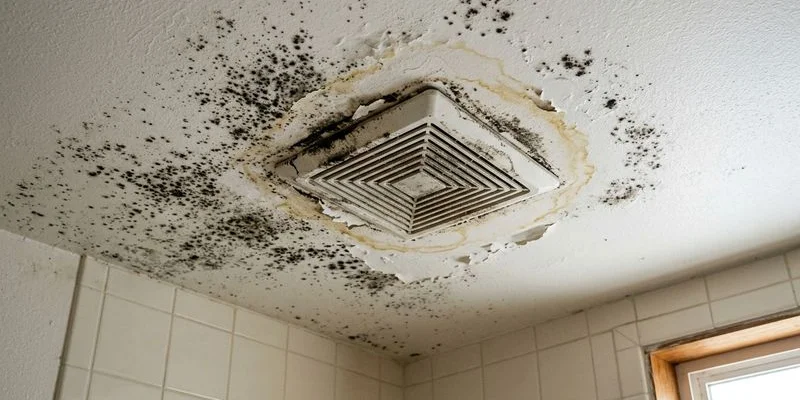
- Bathroom ceilings directly above showers
- Window frames dealing with heavy winter condensation
- Poured concrete basement walls
- Cabinet bases under kitchen sinks
- Attic sheathing beneath roof leaks
What to do: Measure the affected area before taking any action. The Environmental Protection Agency (EPA) specifically recommends hiring a professional for any mold patch larger than 10 square feet. We advise tackling smaller spots on non-porous surfaces with diluted hydrogen peroxide, but porous materials like drywall always require professional removal.
3. Recent Water Damage or Leaks
A recent water intrusion event drastically increases your risk of structural contamination. We often inspect homes months after a burst pipe, only to find extensive growth hiding completely out of sight. The timeline for this process is incredibly short.
The Federal Emergency Management Agency (FEMA) confirms that mold begins colonizing damp building materials within 24 to 48 hours.
Once established, these colonies can expand rapidly. Under ideal conditions, the growth rate can reach up to one square inch per day. Kansas experiences between 80 and 110 freeze-thaw cycles every winter, making our region highly susceptible to tiny, hidden pipe fractures that slowly feed these colonies.
Assessing the Hidden Damage
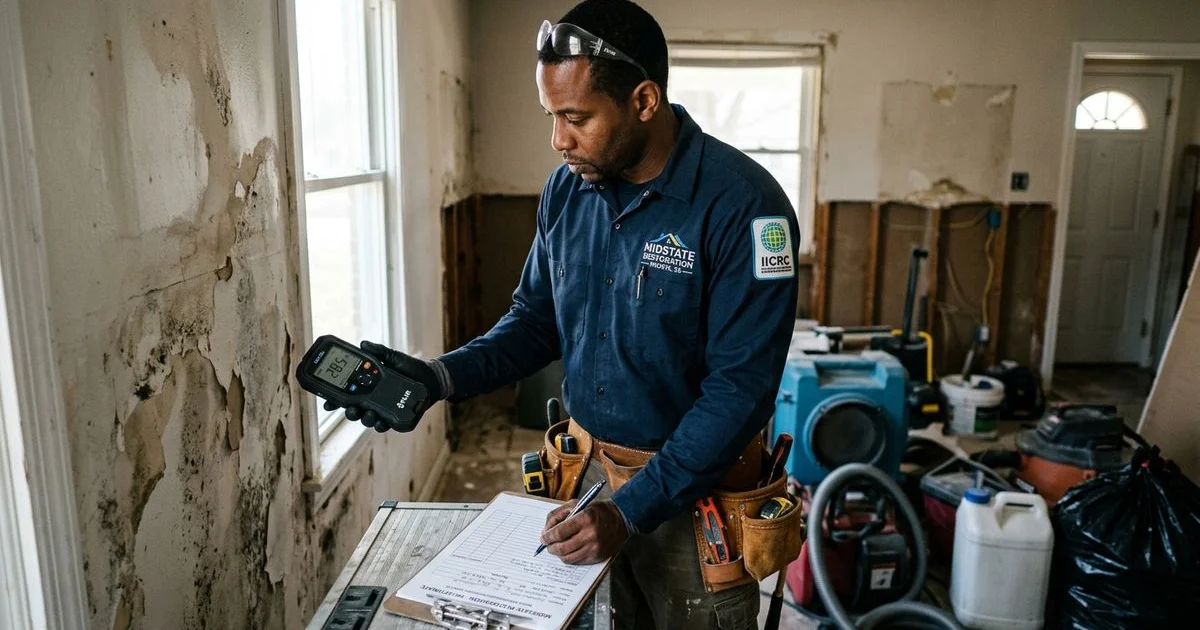
Surface drying is never enough. Even if your floors feel dry to the touch, moisture remains trapped inside wall cavities and under baseboards. We utilize advanced diagnostic tools to find this hidden water.
| Diagnostic Tool | Primary Function | Benefit |
|---|---|---|
| Infrared Cameras | Detects temperature variations | Spots hidden leaks behind drywall |
| Pinless Moisture Meters | Measures internal moisture | Scans large areas without damage |
| Pin Moisture Meters | Provides exact moisture percentages | Confirms the precise level of saturation |
What to do: Schedule a thorough moisture verification process if you have experienced any flooding or leaks in the past year. We use the tools listed above to check for hidden dampness long after the initial event. Securing a professional assessment is the only way to guarantee your wall cavities are completely dry.
4. Allergy-Like Symptoms That Worsen Indoors
Unexplained health issues are a major red flag for indoor air quality problems. We frequently speak with clients who mistake their indoor symptoms for a persistent cold or seasonal hay fever. Nearly 60 million Americans suffer from allergic rhinitis, making it easy to dismiss early warning signs.
The critical differentiator is timing and location.
Kansas allergy seasons follow a predictable pattern, peaking with tree pollen in the spring and weed pollen in the fall. If your symptoms flare up during low-pollen months or disappear entirely when you leave your house, indoor contamination is the likely culprit.
Identifying Mold-Specific Reactions
Prolonged exposure to indoor allergens triggers very specific physical responses. You should watch for these common indicators:
- Red, itchy, or watery eyes (allergic conjunctivitis)
- A persistent, dry cough
- Unexplained skin rashes or irritation
- Headaches that fade when you step outside
- Chronic nasal congestion
What to do: Consult your doctor about your symptoms and explicitly mention your concerns about your indoor air quality. The CDC reports that damp indoor environments can significantly worsen pre-existing asthma and even trigger new-onset asthma. We strongly suggest scheduling an air quality test if your respiratory issues consistently improve when you spend a weekend away from home.
5. Bubbling, Peeling, or Warping on Walls and Surfaces
Water always leaves a physical footprint on your building materials. We consider distorted surfaces to be one of the most reliable visual indicators of a hidden moisture problem. When water pools behind a wall, it forces the materials to expand, shift, and degrade.
You will typically notice paint bubbling without an obvious cause or wallpaper lifting at the seams.
The structural integrity of your home depends on maintaining proper moisture levels. Normal drywall moisture content should sit comfortably between 5% and 12%, though under 1% is ideal. When that number climbs above 17%, the gypsum core is entirely compromised and cannot be saved.
Warning Signs of Structural Damage
Keep a close eye on the physical condition of your rooms. Look for these specific changes in your building materials:
- Drywall that feels soft or spongy to the touch
- Hardwood floors that begin to cup or buckle
- Baseboards pulling away from the wall
- Discolored water stains expanding across ceilings
- Hollow sounds when tapping on solid surfaces
What to do: Do not simply scrape away peeling paint and apply a fresh coat. The underlying moisture source must be eliminated first. We recommend using a non-destructive pinless moisture meter, like the Tramex ME5, to assess the saturation levels behind the paint.
Identifying the exact moisture percentage dictates whether the material can be dried or must be replaced.
6. Condensation on Windows and Pipes
Chronic condensation serves as a daily reminder that your indoor environment is out of balance. We see this issue peak during extreme weather shifts, particularly in homes with aging windows or poorly insulated pipes. When warm, moist air collides with a cold surface, it leaves water droplets behind.
This constant moisture creates an ideal breeding ground for microbial growth.
The EPA strongly advises keeping your indoor relative humidity between 30% and 50%. Hitting this target requires adjusting your strategy based on the season. During freezing Midwest winters, you should aim for the lower end of that spectrum, roughly 30% to 40%, to prevent window condensation.
Managing Seasonal Humidity
Summer brings a completely different set of challenges. When outdoor humidity spikes, you need to keep your indoor levels between 40% and 50% to prevent the air from feeling heavy and sticky.
| Season | Ideal Humidity Range | Primary Goal |
|---|---|---|
| Winter | 30% - 40% | Prevents window condensation and frost |
| Spring/Fall | 35% - 45% | Maintains comfort during temperature swings |
| Summer | 40% - 50% | Stops sticky air and inhibits fungal growth |
What to do: Purchase a digital hygrometer from any local hardware store to monitor your levels daily. We advise running a dehumidifier in your basement and upgrading your bathroom exhaust fans if your readings consistently top 50%. Controlling the ambient moisture is the most effective way to protect your property long-term.
7. Previous Mold That Keeps Returning
A colony that regrows after a thorough cleaning is a clear sign of a deeper structural issue. We receive countless calls from frustrated property owners who have spent weeks scrubbing the same stubborn spot. The problem usually stems from using the wrong cleaning agents on the wrong materials.
Many people immediately reach for a bottle of household bleach.
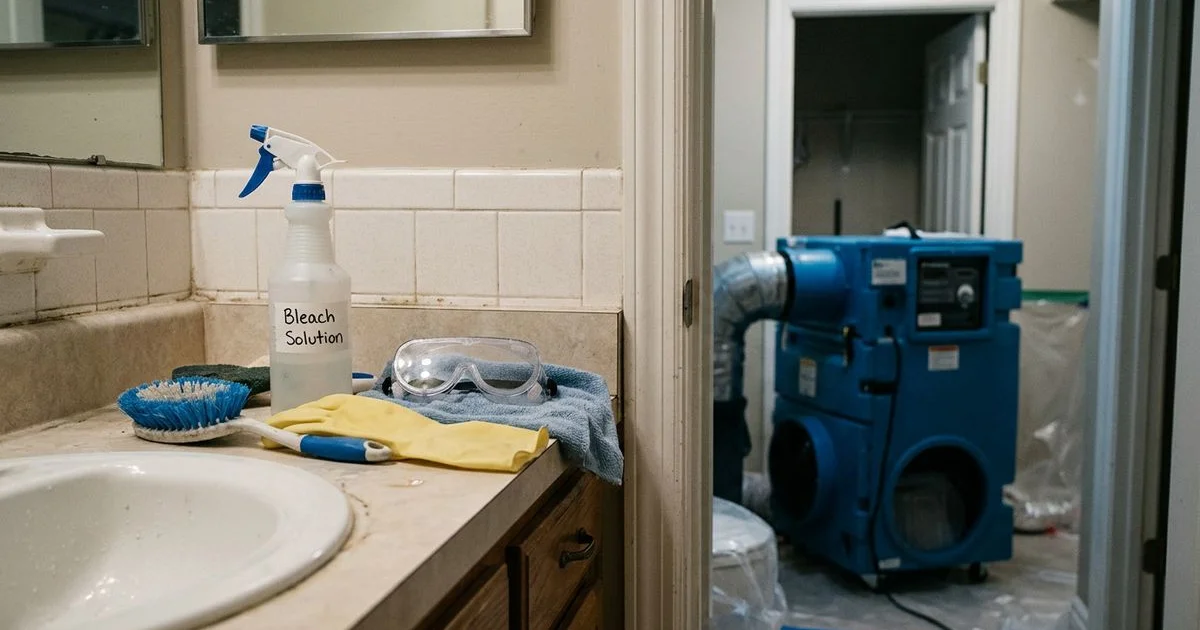
This is a critical mistake. Both the Occupational Safety and Health Administration (OSHA) and the EPA have stated that bleach is ineffective for treating porous surfaces like drywall and wood. Household bleach is approximately 90% water.
Why Bleach Fails on Porous Surfaces
Bleaching a porous wall only creates an illusion of cleanliness. You should avoid surface-level treatments because:
- Bleach only removes the color from the top layer of the fungus.
- The underlying root system (mycelium) remains completely intact.
- The high water content in bleach actively feeds the remaining roots.
- Dead spores left behind can still trigger severe allergic reactions.
What to do: Put the bleach away and address the actual moisture source. Recurring growth requires physical extraction of the contaminated materials.
We highly recommend contacting a professional mold remediation company to handle the safe removal of porous items. True remediation removes the entire root structure instead of just bleaching the surface.
When to Call a Professional
Not every single spot of discoloration requires a full-scale emergency response. We always tell our clients that minor, isolated incidents on hard surfaces can often be handled with basic maintenance. You need to know exactly when a situation crosses the line from a DIY cleanup to a hazardous material issue.
You should immediately seek professional help when:
- The affected area exceeds 10 square feet in total size.
- You discover growth inside your HVAC system or ductwork.
- Family members experience unexplained respiratory symptoms.
- The contamination resulted from Category 3 water, like a sewage backup.
- The fungus keeps returning despite your best cleaning efforts.
Our team at Wichita Mold Removal Services is dedicated to restoring peace of mind for property owners through expert restoration and cleaning solutions. Rapid, effective relief during stressful emergencies is the core of our business. Our AMRT-certified technicians use infrared cameras, moisture meters, and air quality testing to identify the problems you cannot see.
Do not let a hidden leak compromise your property value or your health. Recognizing these warning signs of mold in your Wichita home is the first step. Call (913) 795-7310 to schedule your comprehensive inspection today.